






















The choice of an incorrect forklift capacity is among the most costly mistakes made by a logistics operation or warehouse: too small, and they find themselves restricted by the load capacity; too big, and they end up incurring unnecessary costs in power, battery capacity, and facility space. Bahrain’s logistics, ports, manufacturing, and food & beverage sectors all employ electric forklifts for the cleaner operation they provide compared to diesel equipment, which makes a difference in warehouses and climate-controlled settings.
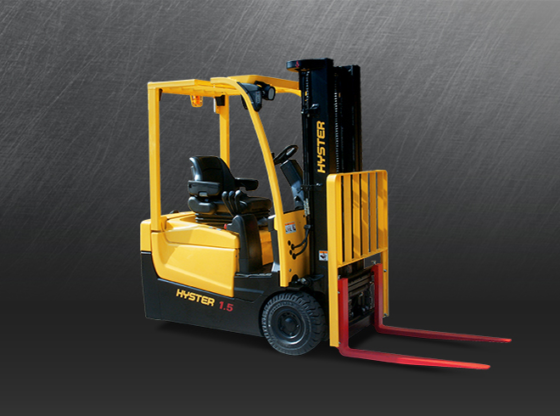
But “electric forklift” covers an enormous range, from a hand-guided pallet truck rated under two tons to a heavy counterbalance truck built for shipping containers and structural steel. Understanding how capacity actually works, and where each category fits, makes the difference between a machine that suits your operation and one that constantly falls short. Whether you’re specifying an electric forklift in Bahrain for a small retail warehouse or a heavy manufacturing yard, the fundamentals of capacity rating stay the same.
Understanding How Forklift Capacity Is Rated
Every forklift’s rated capacity is tied to a standard load centre, typically 500mm (24 inches) from the face of the forks to the load’s centre of gravity. This matters because a forklift rated for 2 tons at a 500mm load centre will lift less than 2 tons if the load is bulkier or the centre of gravity sits farther out on the forks. Capacity also decreases as lift height increases, since a taller mast shifts the truck’s overall centre of gravity forward. Anyone specifying an electric forklift in Bahrain for a specific application should confirm the actual working load centre and maximum lift height required, rather than relying on the headline capacity figure alone.
Electric Pallet Trucks: The Entry Point
Pallet trucks are the lightest category and typically the first step up from manual handling.
- Typical capacity: 1.5 to 2.5 tons
- Best suited for: horizontal transport of palletized goods over short to medium distances, loading docks, and retail backrooms
- Key advantage: compact footprint and low cost of entry, with minimal training required to operate safely
- Limitation: no significant lift height, so they’re not a substitute for racking or stacking applications
Reach Trucks and Narrow Aisle Machines
Once goods need to be stacked in racking, reach trucks and narrow aisle equipment take over from pallet trucks.
- Typical capacity: 1.4 to 2.5 tons
- Best suited for: high-bay warehouse racking, cold storage, and facilities where aisle width is at a premium
- Key advantage: significantly reduced aisle width requirements compared to counterbalance trucks, allowing denser racking layouts
- Specialist options: very narrow aisle (VNA) trucks and multi-directional forklifts, such as those built by Combilift and Aisle Master, allow operators to maximize warehouse storage density without widening aisles, an increasingly common choice for any operation running an electric forklift in Bahrain’s tighter urban logistics facilities
Standard Electric Counterbalance Forklifts
This is the category most people picture when they think of a forklift, and it covers the widest range of everyday industrial use.
| Capacity Range | Typical Application |
| 1.0 – 2.0 tons | Light warehouse and retail distribution |
| 2.0 – 3.5 tons | General manufacturing and logistics |
| 3.5 – 5.0 tons | Heavier palletized goods, construction material yards |
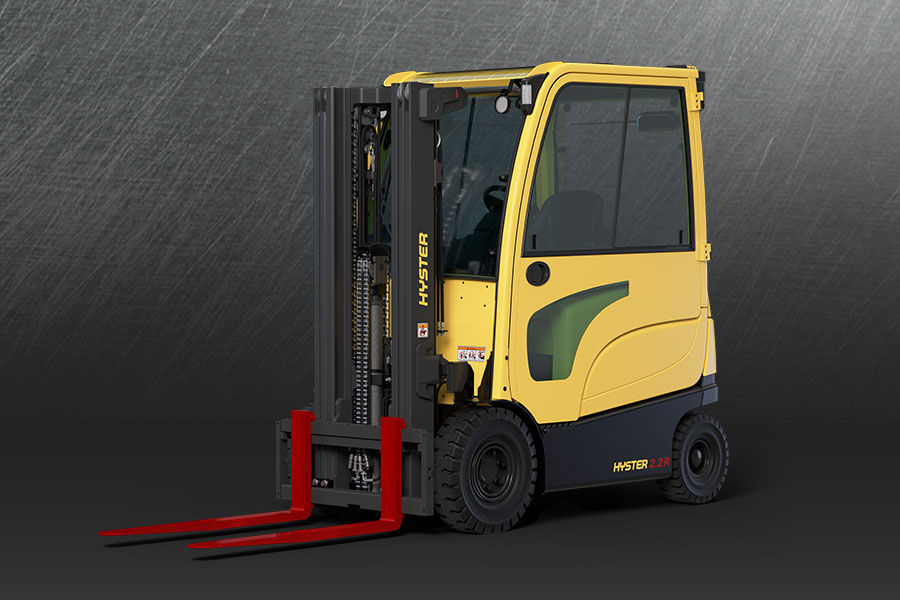
An electric forklift in Bahrain in this range covers most manufacturing, food & beverage, and general warehousing operations across the kingdom, since it balances lifting power with manageable battery size and charging requirements.
Heavy-Duty Electric Counterbalance: Approaching 10 Tons
For years, very high-capacity forklift work was almost exclusively handled by diesel or LPG trucks, since electric drivetrains struggled to deliver the sustained power needed for loads above 5 tons. That has changed significantly with the shift toward lithium-ion battery technology and higher-voltage electric drive systems.
Major manufacturers now produce electric counterbalance models rated well into double-digit tonnage, built for container handling, structural steel, and heavy palletized cargo, while still delivering zero tailpipe emissions and lower noise levels than an equivalent internal combustion truck. This shift has changed how operators think about specifying an electric forklift in Bahrain for applications once thought to require diesel power.
Matching Capacity to Application
| Industry | Typical Forklift Category |
| Retail and small warehousing | Pallet trucks, light counterbalance |
| Cold storage and high-bay racking | Reach trucks, VNA/narrow aisle |
| Food & beverage manufacturing | 1.5 – 3.5 ton counterbalance |
| Ports and container handling | Heavy-duty counterbalance, container handlers |
| Construction material yards | 3.5 – 5 ton counterbalance |
| Steel and heavy manufacturing | Heavy-duty electric or IC counterbalance |
Choosing the Right Electric Forklift for Your Operation
- Confirm your actual load weight and dimensions, not just an estimate, since bulky or irregularly shaped loads shift the effective load center
- Check your maximum required lift height, since capacity drops as mast height increases
- Assess your aisle widths to determine whether a standard counterbalance or a narrow aisle solution is more appropriate
- Consider battery type and charging infrastructure lithium-ion batteries support opportunity charging between shifts, while lead-acid batteries typically need a dedicated charging area and battery-swap routine for multi-shift operations
- Factor in duty cycle and shift patterns, since continuous multi-shift operations place different demands on battery capacity than single-shift use
- Work with a supplier who can support the equipment locally, since parts availability and service response time matter as much as the initial purchase price
Conclusion
Electric forklift capacity isn’t a single number to shop by; it’s a combination of load center, lift height, aisle width, and duty cycle that determines whether a machine suits your operation. From compact pallet trucks for short transport runs to heavy-duty counterbalance trucks now approaching diesel-level capacities, the electric forklift category has expanded to cover nearly every material-handling task across Bahrain’s ports, warehouses, and manufacturing facilities. Kanoo Machinery is an authorized distributor for Hyster, Combilift, and Aisle Master in Bahrain, offering a full range of electric forklifts from pallet trucks through heavy counterbalance models, backed by local parts support and service. Contact our team at 800 01125 to find the right electric forklift in Bahrain for your operation.
Frequently Asked Questions
What load center is used to rate forklift capacity?
Most forklifts are rated at a standard 500mm (24-inch) load center, and actual lifting capacity decreases if the load’s center of gravity sits further from the forks.
Can electric forklifts handle the same loads as diesel forklifts?
Modern electric counterbalance trucks, particularly those using lithium-ion battery technology, now reach capacities previously available only in diesel or LPG models, so an electric forklift in Bahrain can increasingly replace diesel equipment even in heavier-duty applications.
Why do reach trucks have lower capacities than standard counterbalance forklifts?
Reach trucks are designed primarily for vertical lifting within narrow racking aisles rather than heavy horizontal transport, so their capacity and design trade-offs prioritize maneuverability and lift height over raw load capacity.
How do I choose between lithium-ion and lead-acid batteries for an electric forklift?
Lithium-ion batteries support faster opportunity charging and require less maintenance, making them well suited to multi-shift operations, while lead-acid batteries remain a lower-cost option for single-shift use with a dedicated charging routine.