















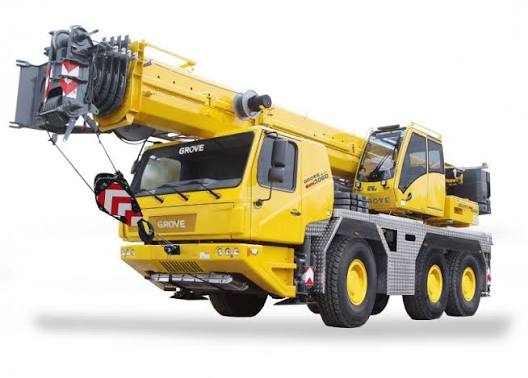

Bahrain’s infrastructure development keep crane demand steady but that demand is rarely uniform. One contractor might need a crane for a single heavy lift on a refinery turnaround. Another is running a multi-year infrastructure project that needs the same machine on-site every working day for the next three years.
The financial logic of those two scenarios points in completely different directions, and the decision between renting and purchasing all terrain cranes is one of the most significant equipment procurement choices a business makes.
Get it right and you have the right machine at the right cost structure for the work. Get it wrong and you’re either paying for a crane that sits idle between jobs. The right answer depends on project duration, lift frequency, maintenance capability, and how the capital commitment fits into the broader business position.
What All Terrain Cranes Are and Why They’re the Default Choice in Bahrain?
All terrain cranes combine on-road travel capability with off-road performance. They move under their own power at highway speed between sites, then deploy outriggers and configure for the lift without requiring a separate low-loader for every repositioning. That flexibility makes them the most practical mobile crane for Bahrain’s mix of urban construction, industrial facility work, petrochemical plant maintenance, and infrastructure projects across the island.
Grove all terrain cranes supplied by Kanoo Machinery in Bahrain are built on this core capability. The Manitowoc Crane Control System (CCS) with ECO mode manages engine output intelligently across different lift configurations, reducing fuel consumption and operating costs. MEGATRAK independent suspension maintains traction and stability across the terrain conditions common to Bahrain’s active project sites. The range covers configurations from smaller capacity all terrain cranes for urban and compact site work up to large multi-axle units for major industrial lifts.
Why Rent All Terrain Cranes?
Rental makes financial sense in a specific set of circumstances. Identifying whether your situation fits those circumstances is the starting point.
- Project is defined and time-limited. If the lift requirement is tied to one project with a clear start and end, rental keeps capital free for the duration. Once the project closes, the crane goes back and the cost stops.
- Lift frequency is low or unpredictable. All terrain cranes that sit idle still depreciate, require insurance, and need maintenance. For contractors who need crane capacity occasionally rather than continuously, renting eliminates idle cost entirely.
- You need a specific configuration for one job. Different projects require different lift capacities and boom configurations. Rental lets you match the crane specification exactly to each job without owning a machine that’s over or under-specified for most of what you do.
- No in-house maintenance capability. Owning all terrain cranes requires either in-house technical capability to service them or a service contract with a qualified provider. If neither is in place, the operational overhead of ownership increases considerably.
- Capital is better deployed elsewhere. For businesses where capital generates higher returns in core operations than in owned crane assets, rental preserves liquidity and keeps the balance sheet leaner.
Why Purchase All Terrain Cranes?
Purchase makes financial sense when the cost-per-lift hour of a rented crane, accumulated over the project timeline, exceeds the total cost of ownership and usually when the timeline is long enough to make that calculation clearly favour buying.
- Long-duration projects with consistent demand. A project running two or three years with daily or near-daily crane requirements reaches the crossover point where purchase is cheaper than rental fairly quickly. Beyond that crossover, every additional month of rental is money that could have been equity in an owned asset.
- Multiple concurrent or sequential projects. Contractors running several active sites can utilise owned all terrain cranes across projects without paying rental premium on each one. The utilisation rate across the fleet determines the economics higher utilisation improves the ownership cost per hour significantly.
- Operational control matters. Owned equipment is available when needed, configured to your requirements, and maintained to your standards. For projects where crane availability on short notice is critical refinery maintenance windows, for example owning removes the dependency on rental availability.
- Residual value retention. Grove all terrain cranes hold residual value well. A machine purchased and well-maintained through a multi-year project retains meaningful resale value, which offset against the original purchase cost changes the total cost of ownership calculation.
- Lease-to-own as a middle path. Kanoo Machinery offers equipment on outright sale, long lease, and lease-to-own terms. Lease-to-own captures the operational benefits of ownership control, availability, building equity while spreading the capital commitment across the project timeline. For businesses that want the machine but not the upfront capital outlay, this is frequently the most practical structure.
Comparing side by side
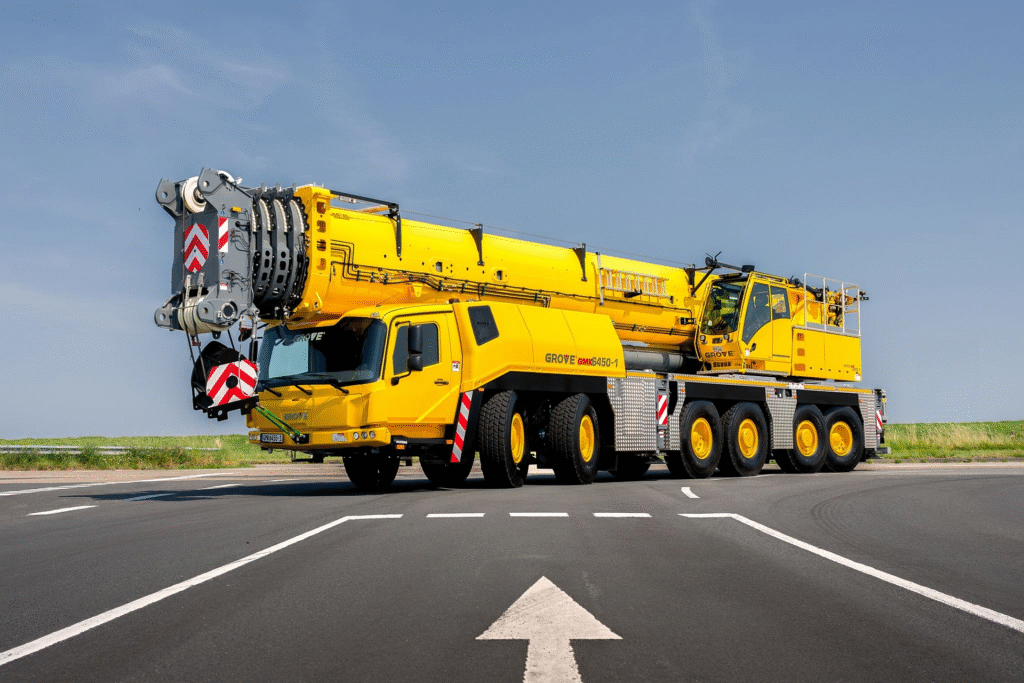
There’s no single number that makes rental or purchase universally correct; it depends on utilisation, project duration, and cost of capital. But the framework for the comparison is consistent:
| Factor | Rental | Purchase / Lease-to-Own |
| Upfront capital commitment | Low | High (or spread over lease) |
| Monthly cost at full utilisation | Higher per hour | Lower per hour at high utilisation |
| Idle cost | None return the crane | Depreciation and maintenance continue |
| Maintenance responsibility | Rental provider | Owner (or service contract) |
| Availability on short notice | Subject to fleet availability | Guaranteed |
| End-of-project flexibility | Walk away | Sell, re-deploy, or retain |
| Configuration match | Can select per-job | Fixed to owned specification |
The crossover point where purchase becomes cheaper than cumulative rental typically falls somewhere between 12 and 24 months of consistent utilisation depending on the crane class and rental rate. Beyond that point, ownership almost always wins on total cost.
Final Take
The rental vs purchase decision on all terrain cranes is a financial calculation, not a preference. Short projects with low or unpredictable lift frequency point toward rental. Long projects with consistent crane demand point toward purchase or lease-to-own. What makes the Bahrain context specific is the combination of project pipeline visibility, the island’s manageable logistics geography, and the availability of Kanoo Machinery’s after-sales infrastructure which removes one of the main barriers to crane ownership for businesses that have the utilisation to justify it. If you are looking to buy or lease an all terrain case, do check out our website Kanoo Machinery or contact our team at 800 01125.
FAQs
What Grove all terrain cranes does Kanoo Machinery supply in Bahrain?
Kanoo Machinery supplies the full Grove all terrain crane range through its Bahrain operation, available on outright purchase, long lease, and lease-to-own terms with full after-sales support.
What is the typical crossover point where purchase becomes cheaper than rental?
It varies by crane class and utilisation rate, but consistent daily use typically makes purchase more cost-effective than rental somewhere between 12 and 24 months.
What is lease-to-own and how does it work?
Lease-to-own allows operators to use the crane while building equity toward ownership, spreading the capital commitment across the project timeline rather than paying the full purchase price upfront.