















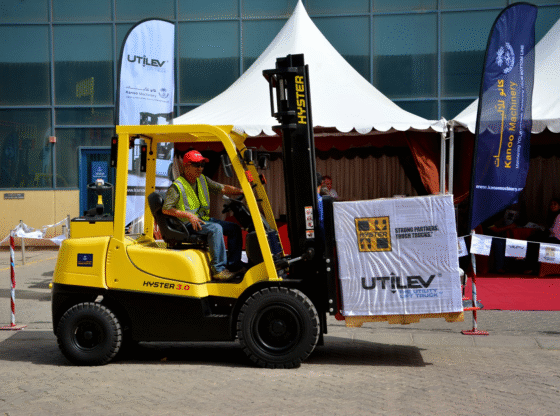

A forklift sitting idle still costs you money. A forklift you do not have when you need it can cost you even more.
This is the dilemma many businesses face across United Arab Emirates. With rising operational costs, tighter timelines, and fluctuating demand, choosing between renting and buying is no longer a simple financial decision. It directly impacts productivity, cash flow, and long-term efficiency.
If you are considering forklift rental in Abu Dhabi, this guide will help you make a practical, cost-driven decision based on real business scenarios.
Step 1: Understand How Your Business Uses Forklifts
Before comparing options, you need clarity on usage patterns. This is the foundation of your decision.
Key questions to evaluate
- How many hours per day is the forklift used?
- Is the requirement short-term, seasonal, or year-round?
- Do you handle heavy loads or standard pallet movement?
- Do you need specialized forklifts for specific environments?
- Is your workload predictable or fluctuating
Usage-based Decision Guide
| Usage Type | Recommended Option |
|---|---|
| Occasional or project-based | Rent |
| Seasonal demand | Rent |
| Daily, long-term operations | Buy |
| Uncertain or growing operations | Start with rental |
If your needs are not stable, committing to ownership too early can increase costs.
When forklift rental in Abu Dhabi Is the Smarter Choice
For many businesses, forklift rental in Abu Dhabi offers flexibility that ownership cannot match.
Ideal scenarios for renting
- Short-term construction or infrastructure projects
- Temporary warehouse expansion
- Seasonal spikes in demand
- Testing new operational setups
- Projects with uncertain timelines
Practical advantages of renting
- No upfront capital investment
- Maintenance handled by provider
- Access to modern equipment
- Quick replacement in case of breakdown
- Flexibility to upgrade or downgrade equipment
This is especially useful in industries where demand changes quickly.
When Buying a Forklift Makes More Financial Sense
Ownership becomes more viable when forklift usage is consistent and predictable.
Best cases for buying
- Daily warehouse operations
- Long-term industrial use
- High utilization rates
- Stable business growth
Benefits of buying
- Lower cost over long-term usage
- Full control over equipment availability
- Customization based on operational needs
- No dependency on rental availability
However, ownership also means taking responsibility for maintenance, repairs, and lifecycle management.
Real Cost Breakdown: Renting vs Buying
Most businesses make decisions based only on upfront cost. The smarter approach is to evaluate total cost of ownership.
Cost comparison table
| Cost Factor | Renting | Buying |
|---|---|---|
| Initial investment | Minimal | High upfront cost |
| Monthly expenses | Fixed rental fee | No rental cost but ongoing expenses |
| Maintenance | Usually included | Paid separately |
| Repairs | Covered in most cases | Additional expense |
| Depreciation | Not applicable | Reduces asset value |
| Flexibility | High | Limited |