





















The conversation around electric forklifts in the UAE has shifted considerably over the past few years. What was once primarily a cost-versus-emissions discussion has become a more operational decision. Battery technology has improved, charging infrastructure is more accessible, and the total cost of ownership picture has changed enough that electric is now the default choice across most indoor warehouse applications.
But the switch isn’t automatic. Diesel forklifts still make sense in specific UAE operating environments, and choosing electric without understanding where it performs well and where it doesn’t creates operational problems that cost more to fix than they would have to avoid. The comparison that actually matters for UAE warehouses is about matching the right machine to the specific application, floor environment, shift structure, and operating conditions of each facility.
Where Electric Forklifts Outperform Diesel
Indoor applications with air quality and noise requirements
This is the clearest case for electric forklifts in the UAE. Warehouses, distribution centres, food processing facilities, pharmaceutical storage, retail logistics hubs, and any enclosed space where exhaust fumes and noise affect either the product or the people working in the building are applications where diesel is simply the wrong choice.
Electric forklifts produce zero direct emissions and operate significantly more quietly than internal combustion alternatives. In a cold store or food distribution environment both common across Dubai, Abu Dhabi, and Sharjah’s logistics corridors diesel isn’t just inconvenient, it’s incompatible with product safety and regulatory standards.
Lower running costs at sustained utilisation
Electric forklifts have fewer moving parts than diesel no engine, no transmission, no exhaust system, no oil changes. Maintenance costs across the service life of an electric truck are substantially lower than a comparable diesel unit. Energy costs are also lower: charging a battery costs significantly less than fuelling a diesel engine for equivalent work output, particularly in the UAE where diesel fuel costs are variable and logistics facilities run multi-shift operations.
On a single-shift operation with moderate utilisation, the operating cost advantage of electric forklifts is measurable. On a three-shift logistics facility running five or six days a week, it’s significant.
Precise, responsive control in racking environments
Electric forklifts use AC motor technology with precise electronic control over acceleration, braking, and hydraulics. In narrow-aisle racking environments which dominate the UAE’s growing e-commerce and 3PL warehouse sector that precision matters. Operators can position loads accurately at height without the throttle lag that characterises diesel machines.
Where Diesel Still Makes Sense
Outdoor operations on rough or unprepared surfaces
Diesel forklifts are the correct choice for container yards, port operations, construction material handling, and any application where the machine operates primarily outdoors on surfaces that electric tyre configurations aren’t suited for. The UAE’s ports at Jebel Ali, Khalifa Port, and industrial areas across Sharjah, Fujairah, and Ras Al Khaimah all have applications where diesel’s outdoor capability and fuel availability make it practical.
High-capacity heavy-duty outdoor lifting
For loads above the practical range of most electric forklift models large steel fabrications, heavy machinery components, containerised freight diesel internal combustion machines with pneumatic tyres provide the ground clearance, load capacity, and outdoor mobility that the application demands.
Remote sites without reliable charging infrastructure
Some UAE project sites, agricultural operations, and remote industrial facilities don’t have consistent electrical supply for charging. In these environments, diesel’s independence from grid power is a practical advantage. As UAE infrastructure develops, this limitation applies to fewer locations each year but it remains relevant for genuinely remote operations.
The Tyre Type Question
Within electric forklifts, the tyre choice affects where the machine can operate:
| Tyre Type | Floor Requirement | Typical UAE Application |
| Cushion (solid) | Smooth, sealed concrete | Air-conditioned warehouses, distribution centres |
| Pneumatic | Concrete, asphalt, light outdoor | Loading docks, mixed indoor-outdoor movement |
| Lithium-Ion + Pneumatic | Mixed surface, no charging gaps | E-commerce fulfilment, multi-shift 3PL facilities |
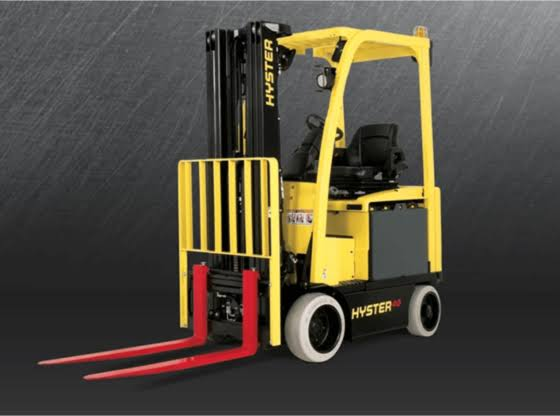
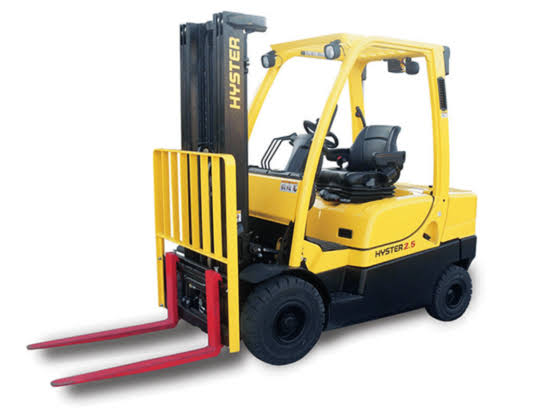
Cushion tyre electric forklifts the E-series from Hyster are not suited for outdoor surfaces or areas with significant debris. Pneumatic tyre J-series models handle outdoor surface transitions that cushion tyre models can’t.
Charging Infrastructure: What UAE Operations Need to Plan
Switching to electric forklifts requires planning the charging setup before the machines arrive. For lead-acid battery fleets, a battery room with adequate ventilation, charging stations per truck, and a battery rotation system for multi-shift operations is standard. For lithium-ion fleets, opportunity charging points positioned at natural break locations eliminate the need for battery swapping entirely.
UAE warehouse operators planning electric forklift transitions typically need to address:
- Available three-phase electrical capacity at the facility
- Number of charging points relative to fleet size and shift structure
- Battery room ventilation requirements for lead-acid systems
- Charging scheduling to avoid peak demand tariffs
This infrastructure investment is a one-time cost that’s recovered through lower running costs over the machine’s service life. For lithium-ion, the charging infrastructure is simpler and the battery life significantly longer than lead-acid reducing the long-term battery replacement cost.
Final Take
Electric forklifts are the right choice for most indoor UAE warehouse applications. The running cost advantage, zero emissions, and precise control capabilities are well-matched to the distribution, logistics, and manufacturing environments where the majority of UAE forklift hours are accumulated. Diesel remains appropriate for outdoor heavy-duty and remote applications where electric infrastructure or outdoor terrain conditions make it impractical. Getting the tyre type, battery technology, and charging infrastructure right alongside the forklift specification itself is what determines whether the transition to electric delivers the operational and cost benefits it’s capable of. For UAE businesses sourcing, renting, or transitioning to electric forklifts, Kanoo Machinery provides the full Hyster range, fleet management capability, and UAE-wide service support from their Dubai, Sharjah, and Abu Dhabi operations. Contact our expert team at 800-KM100(56100)
FAQs
What Hyster electric forklifts does Kanoo Machinery supply in the UAE?
The full range including E1.6–2.0XN and E2.2–3.5XN cushion tyre models, J1.6–2.0XN, J2.2–3.5A, J2.2–3.5XN, and J4.0–5.5XN pneumatic tyre models, the J2.0–3.5XTLG lithium-ion model, and the J10–18XD for heavy-duty applications up to 18,000kg capacity.
Can electric forklifts operate outdoors in UAE conditions?
Pneumatic tyre electric forklift models J-series handle outdoor surfaces including concrete, asphalt, and loading dock areas. Cushion tyre models are designed for smooth sealed concrete indoor floors only.
What is the difference between lead-acid and lithium-ion battery forklifts?
Lithium-ion batteries charge faster, support opportunity charging during breaks without damaging the battery, require no watering maintenance, and have longer cycle life than lead-acid. They suit multi-shift operations where charging windows are short.
Does Kanoo Machinery provide fleet management support for electric forklifts in the UAE?
Yes. Kanoo Machinery’s Remote Monitoring System provides machine telemetry, impact monitoring, utilisation data, and real-time alarm alerts for electric forklift fleets across UAE operations.