
















The process of selecting Jebel Ali Free Zone or KEZAD is more than just the act of picking a preferable licensing price or a beneficial location. It also entails determining what types of machinery will improve warehouse productivity. A warehouse designed with respect to Jebel Ali’s dense logistics system may have different warehouse floors, dock designs, and work models.
KEZAD’s newer, larger-format industrial plots in Abu Dhabi. Operators who treat equipment planning as an afterthought, separate from the free zone decision, frequently end up retrofitting racking layouts or replacing machinery within the first year of operation. Building the right warehouse logistics solutions from day one starts with understanding what each zone actually demands from your equipment fleet.
This article looks at what each free zone actually offers warehouse operators, how that translates into different equipment needs, and how to build the right warehouse logistics solutions around your specific location from the outset.
Jebel Ali Free Zone (JAFZA): What It Offers Warehouse Operators
JAFZA has operated since 1985 as the flagship free zone of DP World, and it remains one of the largest and most established logistics hubs in the region.
- Port adjacency: Located directly next to Jebel Ali Port, one of the busiest container ports in the Middle East, giving warehouse operators fast turnaround between vessel discharge and storage
- Facility density: JAFZA hosts thousands of companies across logistics, petrochemicals, food and agriculture, automotive, and e-commerce, resulting in a dense, mature operating environment
- Warehouse formats: a wide range of pre-built warehouses, light industrial units, and temperature-controlled facilities, typically leased from around 500 sqm upward
- Industry mix: strong concentration in import/export trading, spare parts distribution, and e-commerce fulfilment, alongside established manufacturing tenants
KEZAD: What It Offers Warehouse Operators
KEZAD (Khalifa Economic Zones Abu Dhabi) is one of the region’s largest integrated industrial and logistics ecosystems, adjacent to Khalifa Port in Abu Dhabi.
- Port adjacency: connected to Khalifa Port, a semi-automated deep-water container port serving as Abu Dhabi’s primary trade gateway
- Scale: spans a significantly larger total land area than JAFZA, with capacity for large-format industrial plots alongside standard warehousing
- Sector focus: home to major industrial anchors including aluminium processing, petrochemicals and one of the largest dedicated food industry zones in the region, with substantial cold storage and food processing infrastructure
- Growth trajectory: positioned as a newer and rapidly expanding alternative to Dubai’s established logistics corridor, often offering more flexible large-plot development for operators planning long-term expansion
Side-by-Side Comparison
| Factor | Jebel Ali Free Zone (JAFZA) | KEZAD |
| Location | Western Dubai adjacent to Jebel Ali Port | Southwest Abu Dhabi adjacent to Khalifa Port |
| Established | 1985 | Rebranded and expanded industrial zone under AD Ports Group |
| Ecosystem maturity | Dense, long-established logistics hub | Newer, rapidly scaling industrial ecosystem |
| Typical warehouse sizing | Wide range, from smaller light industrial units to large logistics parks | Emphasis on larger industrial plots alongside standard warehousing |
| Sector strengths | Trading, e-commerce, general logistics, automotive parts | Heavy industry, petrochemicals, food processing, cold storage |
| Best suited for | Operators needing dense connectivity and smaller flexible units | Operators needing large-format space or heavy industrial integration. |
How Location Changes Your Equipment Needs?
The physical differences between these two free zones translate directly into different warehouse logistics solution requirements:
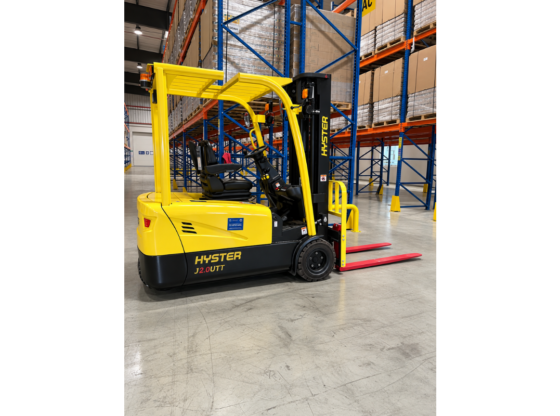
- Aisle width and racking density: JAFZA’s smaller, more tightly leased units often push operators toward narrow-aisle or VNA forklifts to maximize storage density within a limited footprint, while KEZAD’s larger plots can accommodate wider-aisle counterbalance forklift operations.
- Cold storage equipment: KEZAD’s dedicated food zone infrastructure means a higher proportion of tenants need equipment rated for cold-store transitions, including power pallet trucks and reach trucks with appropriate IP ratings.
- Dock configuration: JAFZA’s established multi-tenant logistics parks typically feature standardized dock leveller setups, while newer KEZAD facilities may allow custom dock design suited to specific operational flows.
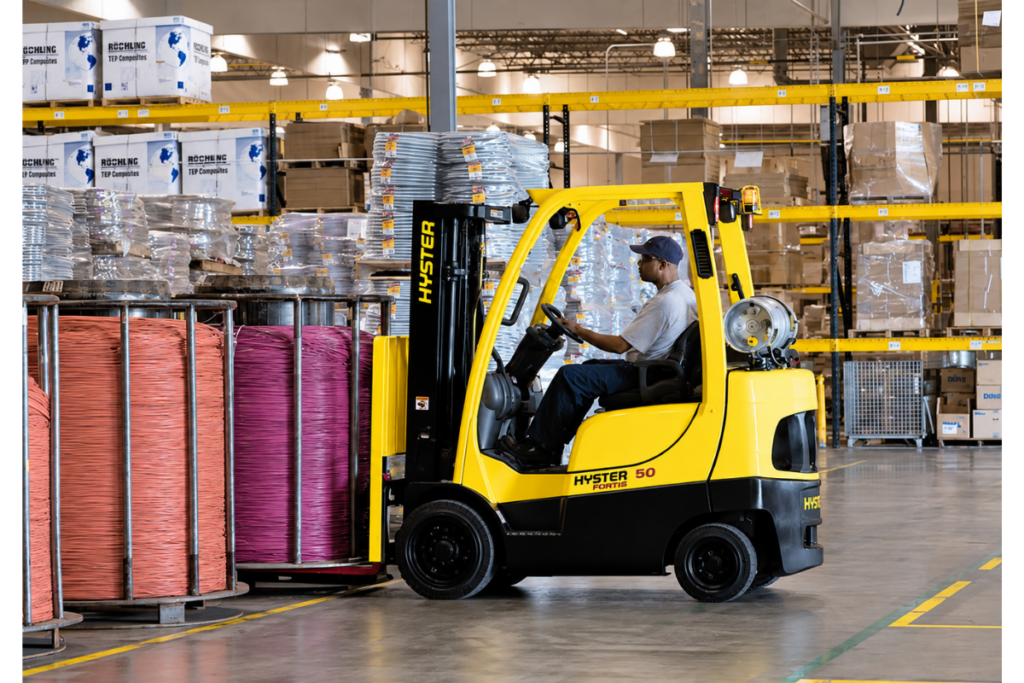
- Shift intensity and equipment duty cycle: High-turnover e-commerce and trading operations common in JAFZA often run multi-shift patterns that favor lithium-ion battery equipment for opportunity charging. In contrast, heavier industrial operations in KEZAD may prioritize raw lifting capacity over rapid charging cycles.
- Container and bulk handling operators near Khalifa Port’s industrial and petrochemical anchors in KEZAD more often need heavier-duty material-handling equipment suited to bulk and industrial cargo than the general trading and parcel-level goods common in much of JAFZA.
Building the Right Equipment Strategy for Your Free Zone
Turning these location differences into practical warehouse logistics solutions comes down to a few key planning steps:
- Confirm your unit or plot size early, since JAFZA’s typically smaller leased footprints and KEZAD’s larger industrial plots call for different racking and aisle strategies from day one.
- Match equipment to your dominant cargo type: general trading goods, food products, or heavy industrial materials each favor a different mix of forklifts, pallet trucks, and reach trucks.
- Plan for cold storage requirements upfront if your operation touches KEZAD’s food zone or any temperature-controlled JAFZA facility, since retrofitting IP-rated equipment later is more costly than specifying it at the outset.
- Factor in shift patterns when choosing between lead-acid and lithium-ion battery equipment, since multi-shift, high-turnover operations benefit more from opportunity charging.
- Work with a supplier who understands both zones, since equipment sourcing, servicing and rental support needs differ across Dubai and Abu Dhabi’s logistics corridors.
Getting these decisions right from the outset is what separates a genuinely effective warehouse logistics solutions strategy from one that requires costly rework once the facility is already operational.
Conclusion
Jebel Ali and KEZAD serve genuinely different operating profiles, and the equipment strategy that works well in one doesn’t automatically transfer to the other; unit size, cargo type, and shift intensity all shift the calculation. Building the right warehouse logistics solutions around your specific free zone from the outset avoids the costly retrofitting that comes from treating equipment as an afterthought to the location decision. Kanoo Machinery supplies and rents Hyster, Combilift, and Aisle Master material handling equipment across both Dubai and Abu Dhabi, including a recent large-scale deployment supporting cold store operations at KEZAD. Contact our team at 800-KM100(56100) to discuss the right equipment strategy for your free zone location.
Frequently Asked Questions
Is KEZAD better than JAFZA for warehouse operations?
Neither is universally better; the right warehouse logistics solutions depend on your operation, with JAFZA suiting operators prioritizing dense connectivity and smaller flexible units, while KEZAD suits operators needing large-format industrial space or proximity to heavy industry and food processing infrastructure.
Do I need different forklifts for JAFZA versus KEZAD facilities?
Not necessarily different brands, but often different configurations. JAFZA’s tighter unit sizes often favor narrow-aisle equipment, while KEZAD’s larger plots can accommodate standard counterbalance forklift operations more easily.
Which free zone is better suited to cold storage operations?
KEZAD has a strong concentration of dedicated food zone and cold storage infrastructure, though temperature-controlled facilities are also available within JAFZA depending on the specific unit leased.
Can Kanoo Machinery support operations in both Dubai and Abu Dhabi free zones?
Yes, Kanoo Machinery supplies, services, and rents material handling equipment and broader warehouse logistics solutions across both emirates, including recent deployments supporting cold store logistics operations at KEZAD.