




















So, when we compare an all-terrain crane and a rough-terrain crane, is either one of them better than the other? If you work in construction, oil and gas, or any heavy industry in Saudi Arabia, you must have compared these two at least once to figure out which one has the upper hand. Truth be told, both are great, but each serves a different purpose. If that is the case, is there a wrong choice between these two? Shouldn’t both be the right choices? The answer to that question is yes, and no.
Either one of them can be the right choice for the right business, but if you are purchasing one that doesn’t suit your business requirements, that is a wrong choice made by you. Did we confuse you even more? Don’t worry, we will get into the details one by one and answer all your questions by the end of this article, because a wrong choice made in picking your crane can cost you time, money, and a lot more complications on-site. As the best rough and all-terrain crane dealer in Saudi Arabia, we don’t want that for you.
This article will break down everything about the all-terrain and the rough-terrain cranes that sound and look similar, but work differently. Read along!
What is an all-terrain crane?
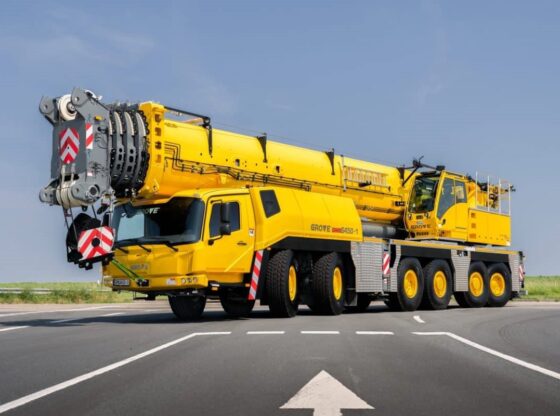
An all-terrain crane, also known as an AT crane, is a mobile crane that combines two functions: driving on public roads and working on off-road surfaces. It is practically a combination of a truck-mounted crane and a rough-terrain model. On public highways, they run at normal speeds (up to 80km/h) without a separate transport vehicle, then turn directly onto a rocky or sandy construction site. They reach the job site faster, set up quickly, and can handle a wide range of lifting jobs.
Their multiple-axle feature helps spread the weight evenly, making them versatile enough to handle both the highway and the job site with full effectiveness.
Key features:
- Multiple axles: 3 to 10 for proper weight distribution
- High travel speed on roads: (up to 80km/h) can be driven directly to the site without a trailer
- All-wheel steering and drive
- High capacity: higher lifting capacities than rough-terrain cranes (from around 50 tonnes up to 1,200 tonnes)
- Suitable for both paved and unpaved surfaces
- Outriggers for stability during lifts
All-terrain vehicles are a popular choice on large construction sites, petrochemical plants, power stations, and infrastructure projects due to their versatility. Such projects require the crane to move between locations regularly, and if you can get a machine that can handle every part of the journey all on its own, what more would you want?
What is a rough-terrain crane?
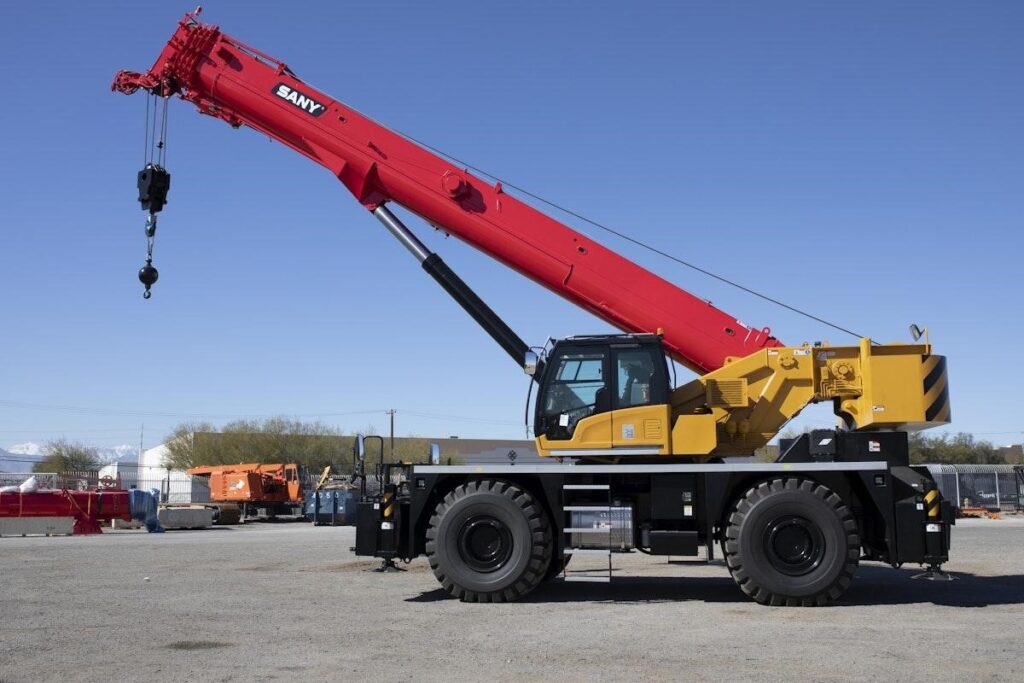
A rough-terrain crane, otherwise known as an RT crane, is built exclusively for off-road work. This crane sits on a rubber-tyred carrier with four large, deep-tread wheels and a two-axle design. This compact design is meant to allow them to navigate tight spaces and “pick and carry” loads across uneven ground. Their main goal is stability and lifting performance on soft, uneven, or unprepared ground.
However, rough terrain cranes are not designed for highway travel. With their huge tires and high centres of gravity, they are not legal to drive on public roads. They usually need a transport truck to move between job sites over long distances. That said, on a single job site with difficult ground conditions such as mud, sand, or steep grades, they perform the best.
Key features:
- Large tires (4): oversized, heavy-duty tires for maximum traction
- Single engine: this powers both the drive and the crane functions
- Two-axle design
- Simple, rugged build
- Lifting capacity generally between 30 tonnes and 150 tonnes
- Four-wheel steering: This allows for incredible maneuverability in tight spots
- Stability: features a wider footprint when outriggers are deployed
- Easy to operate and maintain
- Better suited for confined, muddy, or sandy work areas
Rough-terrain cranes are commonly used in oil field operations, pipeline work, port areas, and projects in remote or sandy locations across the Kingdom.
All-terrain vs. Rough-terrain: A comparison
| Feature | All-terrain crane | Rough-terrain crane |
| Road travel | Yes (highway travel possible) | No (requires separate transport) |
| Off-road performance | Good | Excellent |
| Lifting capacity | 50t to 1,200t | 30t to 150t |
| Number of axles | 3 to 10 | 2 |
| Travel speed | Up to 80km/h | Low (site use only) |
| Best for | Multi-site, varied terrain | Single site, rough ground |
| Setup time | Moderate | Fast |
| Mobility between sites | Self-propelled | Need flatbed transport |
| Operating cost | Higher | Lower |
| Cost | Higher initial and rental cost | More budget-friendly for single sites |
How do you decide which crane works for you?
The best way to decide which of these two cranes is suitable for your work site is by analysing where each of them works best and where your site belongs in all these.
All-terrain cranes are the better choice when
- Your project includes multiple locations, and the crane must constantly travel between them.
- Cases that demand a higher lifting capacity (projects using heavy components)
- The job involves both on-road travel and off-road access
- Your work site belongs to any of the following categories: oil refineries, bridges, high-rise buildings, or large industrial plants
- Your project works within strict time constraints, and you cannot afford to lose time
Rough-terrain cranes are the better choice when
- Your project is concentrated at one site
- Ground conditions are harsh: soft, muddy, or sandy
- You need a simpler, lower-cost crane for moderate lifts
- Your work site has limited space or tight access
- Your project is in a remote area, such as a desert field or a pipeline corridor.
Influence of Saudi Arabia’s work environments on your crane decision
Here, your project location determines the equipment you need. Saudi Arabia, with its desert terrain, oilfield access roads, large infrastructure projects, and a wide range of industrial work across the kingdom, presents a specific set of challenges that directly affect which crane type makes sense, while also driving demand for both crane types.
If you are working on a multi-site project that requires moving between different zones or terrains, an all-terrain crane is the logical choice. In this scenario, working with a reliable all-terrain crane dealer ensures that you get a machine that can move from one point to another without the logistical headache of hiring extra transport trucks.
For oilfield and pipeline work in remote areas, rough-terrain cranes often win out because the ground conditions demand them. These cranes handle soft sand and uneven surfaces better, and the simpler drivetrain means fewer mechanical issues far from a service centre.
Frequently Asked Questions
1.Do I need a special permit to drive an all-terrain crane on Saudi roads?
Yes, you do. All-terrain cranes traveling on public roads require road permits, and you must ensure you comply with Saudi traffic regulations. A good all-terrain crane dealer in Saudi Arabia will guide you through this process properly.
2. Can an all-terrain crane replace a rough-terrain crane on a sandy, muddy, or soft site?
That completely depends on the specific model and outrigger setup of the crane you own. However, keep in mind that rough-terrain cranes usually handle extreme terrains better due to their large tires and lower ground pressure. But if you are working on a moderately soft ground, an all-terrain crane can work fine with proper ground mats.
3. Can I drive a rough-terrain crane on the road if it is a short distance?
Under normal circumstances, no, you cannot. Their tires and steering are not designed for highway speeds, and they lack the necessary safety features for public roads and spaces. This is why you are advised to use a trailer to transport the crane, to protect the road and your machine.