

















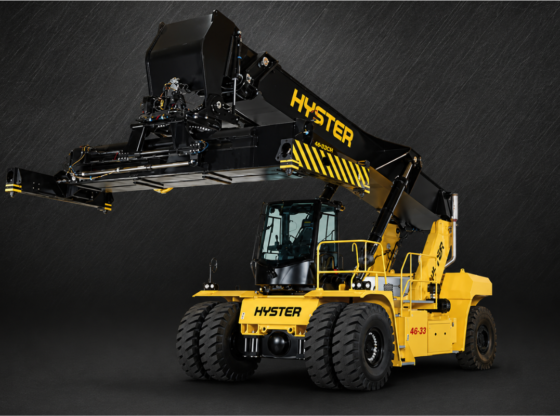

Container volumes moving through Saudi Arabia’s Western Province are climbing at a pace that is starting to outrun the equipment fleets many terminals built their operations around. Jeddah Islamic Port’s ongoing expansion, driven by DP World and Red Sea Gateway Terminal, is pushing total capacity toward the 13 million TEU mark, while a separate $171 million investment from Mawani is adding capacity specifically to handle rising cargo volumes more efficiently. A short distance north, King Abdullah Port at KAEC, built from the ground up as a modern, scalable facility, has grown into one of the fastest-expanding container ports in the region. As throughput rises across both ports, terminal operators are increasingly turning to a reliable Hyster reach stacker supplier, such as Kanoo Machinery KSA, to keep container handling capacity in step with demand.
Rising TEU Volumes Are Putting Pressure on Terminal Equipment
Every additional million TEU moving through a port translates directly into more container lifts, more stacking cycles, and less margin for equipment downtime. Ports scaling as quickly as Jeddah Islamic Port and King Abdullah Port are not just adding vessel calls. They are compressing the time available for container handling between arrival and dispatch, which puts direct strain on the reach stackers and handling equipment already in service.
Terminals that do not scale their equipment fleet alongside cargo growth tend to see the effects first in yard congestion, followed by slower vessel turnaround times as containers back up behind handling bottlenecks. For operators in the Western Province, matching fleet capacity to current and projected TEU volumes has become less of a planning exercise and more of an operational necessity.
Reach Stackers and Empty Container Handlers as the Operational Answer
Reach stackers are built specifically for the kind of high-frequency, flexible container handling that rising port throughput demands. Hyster’s reach stacker line handles standard 20′, 30′, 40′, and 45′ ISO containers and stacks up to five or six containers high, giving terminals the vertical stacking density needed when yard space is limited and volumes keep climbing.
Empty container handling adds a separate layer of pressure at high-growth ports, since empty containers still require the same yard space and handling cycles as loaded ones. Hyster’s empty container handlers with double-handling capability address this directly, allowing terminals to move two empty containers in a single cycle rather than one, which cuts down on the congestion that builds up when empty container volumes rise alongside loaded cargo.
- Container range. Handles standard 20′, 30′, 40′, and 45′ ISO containers.
- Stacking height. Up to five or six containers high, depending on model and configuration.
- Double-handling capability. Empty container handlers can move two empty containers per cycle.
- Yard flexibility. Designed for the tight turning radii and mixed container sizes typical of high-throughput terminals.
Built for Western Province Operating Conditions
Equipment sourced for Western Province terminals needs to hold up under conditions that go beyond typical handling specifications. Hyster’s empty container handler line includes a tropical cooling package rated for ambient temperatures up to 50°C, which is a meaningful differentiator for terminals operating through Jeddah and KAEC’s summer heat. Equipment that is not engineered for these conditions tends to see more frequent cooling system strain and unplanned downtime during the hottest months, precisely when port throughput pressure is often at its highest.
Choosing a Hyster Reach Stacker Supplier for Western Province Terminals
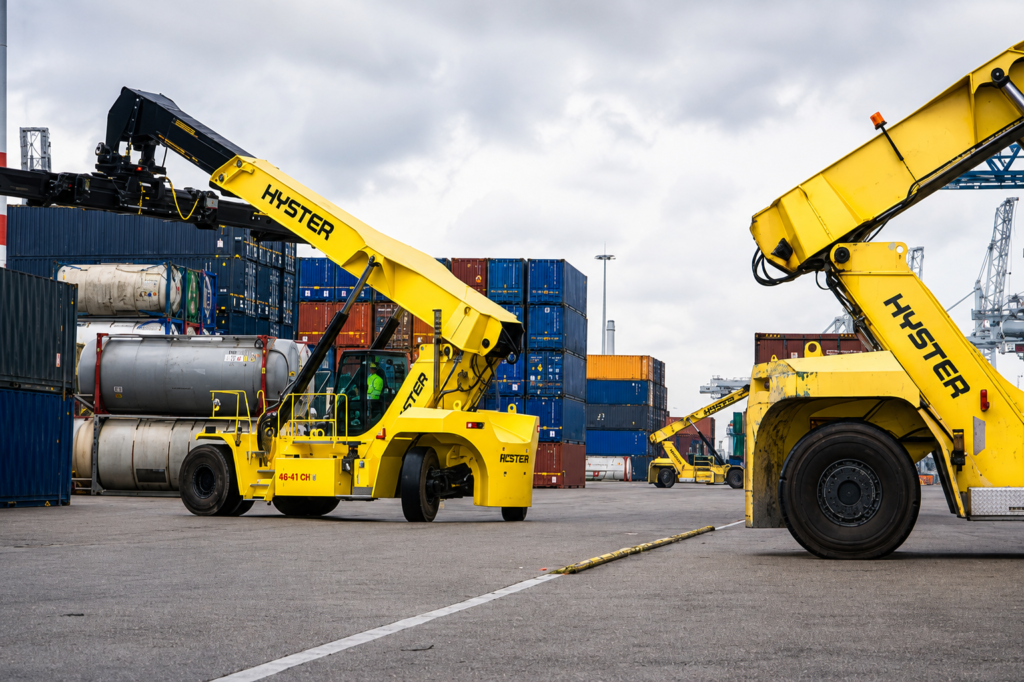
Sourcing decisions for port equipment carry more weight when throughput is climbing as quickly as it is across Jeddah Islamic Port and King Abdullah Port. A few factors are worth prioritizing when evaluating equipment partners for a Western Province terminal:
- Climate-rated equipment. Confirm that empty container handlers include cooling packages rated for regional ambient temperatures, not just standard specifications.
- Parts and service availability. Equipment uptime depends on how quickly replacement parts and qualified service technicians can reach a terminal.
- Fleet compatibility. New equipment should integrate with existing yard operations and any current Hyster fleet already in service.
- Scalability. Given how quickly TEU volumes are climbing at both ports, equipment sourcing should account for near-term capacity growth, not just current handling needs.
Kanoo Machinery KSA, operating as an authorized Hyster reach stacker supplier in the region, is positioned around these same priorities, from climate-rated equipment to parts and service support for Western Province terminals.
Conclusion
Western Province port growth is not slowing down. Jeddah Islamic Port’s expansion toward 13 million TEU, backed by continued Mawani investment, and King Abdullah Port’s rapid rise as a modern, scalable facility are both pushing terminal operators to reassess whether their current equipment fleets can keep pace. Reach stackers built for high-frequency container handling, paired with empty container handlers designed for double-handling and regional heat conditions, are becoming a practical answer to that pressure. Terminals weighing their next equipment investment are increasingly looking for a Hyster reach stacker supplier, such as Kanoo Machinery KSA, that understands both the throughput demands and the operating conditions specific to the Western Province, and can reach out directly to discuss reach stacker and empty container handler options suited to current and projected throughput needs.
FAQs
Why are reach stackers in higher demand at Western Province ports right now?
Rising TEU volumes at Jeddah Islamic Port and King Abdullah Port are increasing the frequency of container lifts and stacking cycles, which puts more pressure on existing equipment fleets and drives demand for additional or replacement reach stacker capacity.
What container sizes can Hyster reach stackers handle?
Hyster’s reach stacker line handles standard 20′, 30′, 40′, and 45′ ISO containers and can stack containers up to five or six high, depending on the model and yard configuration.
Why does the tropical cooling package matter for Western Province terminals?
Ambient temperatures in the region regularly climb into ranges that can strain standard cooling systems. A cooling package rated up to 50°C reduces the risk of heat-related downtime during peak summer operating conditions.
How does double-handling capability help with empty container congestion?
Empty container handlers with double-handling capability can move two empty containers in a single cycle instead of one, which reduces the number of handling cycles needed and helps prevent empty container buildup from adding to yard congestion.
What should terminals prioritize when evaluating equipment suppliers?
Climate-rated equipment, reliable parts and service access, compatibility with existing fleets, and enough scalability to keep pace with projected TEU growth are the main factors worth evaluating before committing to a supplier.