



















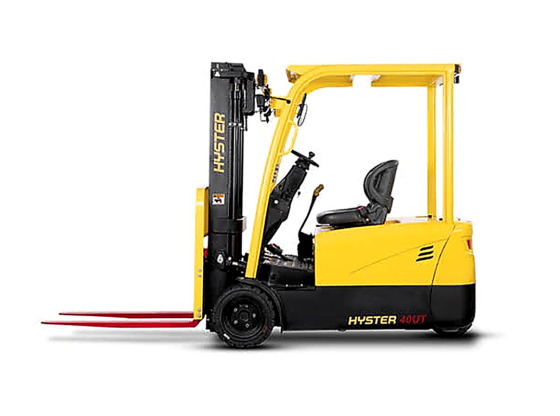

Heavy lifting in Saudi Arabia has long run on diesel, and for many yards it still does. Ports, steel yards and industrial cities now have another option, because a 10 Ton Counterbalance Electric Forklift can handle loads that once called for an internal combustion truck. The right choice depends on the site: its power supply, its shift pattern, its heat and its reporting needs. A fair comparison shows where electric fits well and where diesel remains the practical answer.
What Has Changed for 10-Tonne Handling
Hyster’s heavy-duty electric forklift range covers capacities from 10,000 to 18,000 kg, and Hyster describes it as offering internal-combustion-like performance for indoor and outdoor use. It runs on a 350-volt integrated lithium-ion battery and a pneumatic tyre. The brochure notes about one hour of work from 11 minutes of charging at 90 kW, a Combined Charging System connection as standard, and no battery maintenance. These are manufacturer claims, so a written quotation should confirm them for the configuration in question.
For a 10 Ton Counterbalance Electric Forklift, the rated load and the load centre are the first specifications to match against the loads being moved, since a longer load centre changes the capacity the truck can carry.
Where Electric Makes Sense
- Sites with dependable grid power: Ports and terminals, steel and metals yards, and large warehouses can support chargers, and a site power survey confirms the supply before ordering.
- Planned shift patterns: Opportunity charging during breaks suits operations where trucks stop at set times.
- Mixed indoor and outdoor work: No tailpipe means no exhaust in enclosed bays and loading areas, and Hyster describes the operation as emission-free.
- Operations with emissions data to report: Saudi Arabia has announced a net zero goal for 2060, and the Environmental Law requires permit holders whose activities release emissions to monitor them and report to the competent authority. An electric truck moves forklift emissions from Scope 1 fuel records to Scope 2 electricity records, which charger meters can measure.
- Less fluid handling and servicing: Fewer engine fluids to store and dispose of, and fewer engine items to service.
Where Diesel Still Wins
- Sites without reliable power: Remote construction sites, temporary project yards and new facilities may have no grid supply, and a power upgrade can cost more than the truck justifies.
- Continuous operation with no pause: Charging needs windows, and a 90 kW charger must be installed to reach the quoted charge time. Diesel refuels in minutes at a tank, which suits work that runs without a natural break.
- Unconfirmed heat limits: Temperatures in inland and Eastern Province cities can pass 45°C, with dust and sand. Hyster’s materials describe water-cooled motors and controllers, temperature sensors in each battery pack and a high ingress protection rating, but the brochure reviewed gives no operating temperature range. Until that range is confirmed, diesel remains the known quantity for the hottest and most remote yards.
- Low utilisation: A truck that works few hours a week may not return the extra cost of electric through energy and maintenance savings.
How the Factors Compare
| Factor | Favours electric | Favours diesel |
| Power supply | Reliable grid, room for chargers | No grid, or a costly upgrade |
| Shift pattern | Regular breaks for charging | Continuous work with no pause |
| Site conditions | Confirmed temperature range, shaded charger | Extreme heat, remote location |
| Reporting | Emissions data requested by regulators or customers | No reporting pressure |
| Utilisation | High hours across the year | Few hours across the year |
Deciding With Real Numbers
General claims do not settle the question, so the comparison should rest on the site’s own records: fuel used per shift, kWh per shift, local fuel and electricity tariffs, written quotations and a site survey. Hyster states a lower cost of ownership for its heavy-duty electric range but gives no figure, so any savings need to come from these numbers.
Sustainability claims need the same care. Zero tailpipe emissions at the point of use is accurate. A specific cut in total emissions, or a claim of carbon neutrality, needs data, because grid power still has an emission factor.
Conclusion
Neither option wins everywhere. A 10 Ton Counterbalance Electric Forklift suits yards with dependable power, planned charging breaks, and emissions reporting to meet, while diesel remains the practical choice for remote sites, continuous operation, and heat limits that are still unconfirmed. Many fleets will run both. Kanoo Machinery KSA supplies Hyster equipment with parts and service support, and rental is available to trial equipment first. Contact the Kanoo Machinery KSA team to review loads, power supply, and site conditions, and to find the right 10 Ton Counterbalance Electric Forklift or diesel alternative for the operation.
Frequently Asked Questions
Can a 10 ton electric forklift replace a diesel forklift in Saudi Arabia?
At sites with dependable power, planned charging breaks, and confirmed heat limits, a 10 Ton Counterbalance Electric Forklift can take the place of a diesel truck. At remote sites or in continuous operation, diesel is often still the practical choice.
Does heat affect an electric forklift?
Heat puts stress on electronics, batteries, and chargers. Hyster describes water-cooled motors and controllers and temperature sensors in each battery pack, but the brochure reviewed gives no operating temperature range, so the permitted range should be confirmed with Hyster or the dealer.
How long does a heavy-duty electric forklift take to charge?
Hyster says 11 minutes of charging at 90 kW can support about one hour of work. Actual times depend on the battery configuration and charger.
Does an electric forklift have zero emissions?
It has zero tailpipe emissions. Emissions from the electricity it uses count under Scope 2 and depend on how that power is generated.