




















Not every lifting job on a Saudi construction site or logistics yard needs a dedicated mobile crane with outriggers and a full setup crew. A large share of day-to-day lifting, offloading materials, positioning equipment, and moving items between stops on a delivery route is actually better handled by a crane mounted directly onto the delivery vehicle itself. This is where truck-mounted cranes come in, and understanding when they outperform a traditional mobile crane can save real time and money on jobs that don’t need heavy lift capacity. The two machine types look similar at a glance, both using a hydraulic boom to lift, but they’re built around completely different use cases. This article explains what a truck-mounted crane actually is, how it compares to a rough terrain or all-terrain mobile crane, and when truck-mounted cranes in Saudi Arabia are genuinely the better choice for a jobsite.
What a Truck-Mounted Crane Actually Is
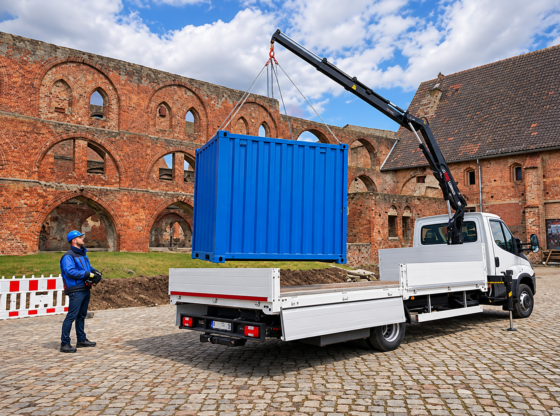
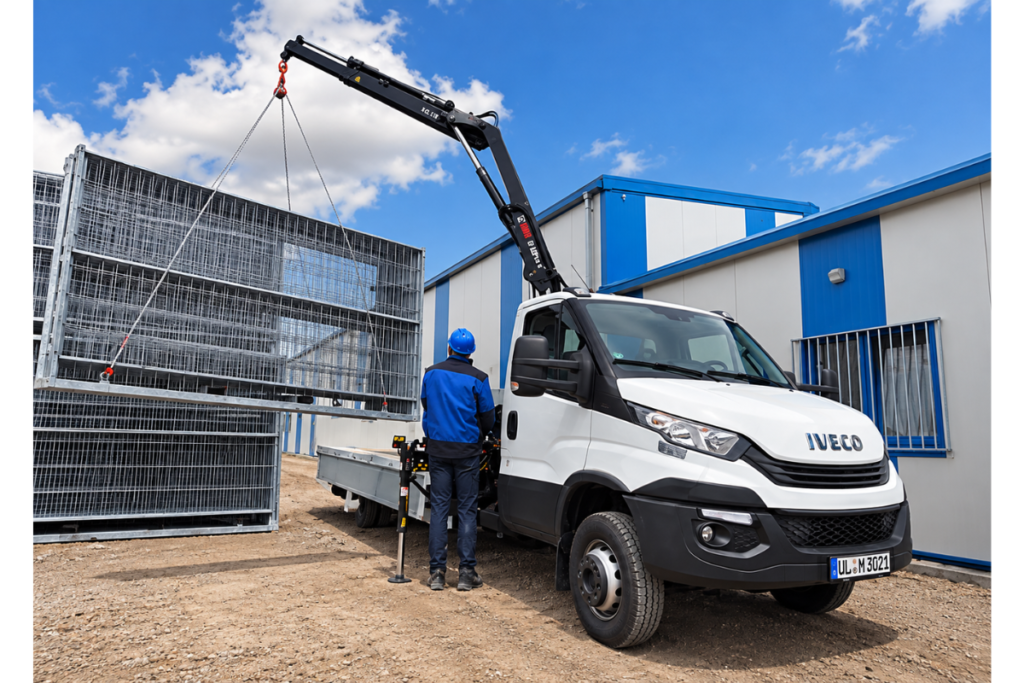
A truck-mounted crane, often referred to as a loader crane, is a hydraulic, articulated-boom crane permanently fitted onto the chassis of a flatbed or delivery truck rather than a standalone crane platform.
- Boom design: articulated, folding boom sections rather than a single telescopic boom, allowing the crane to fold down compactly when not in use
- Mounting: fixed to the truck bed, typically positioned behind the cab, so the vehicle itself becomes both the transport and the lifting platform
- Operation: usually controlled by a remote pendant or a seat mounted on the crane itself, allowing one operator to both drive the truck and operate the crane
- Typical role: loading and unloading the same vehicle it’s mounted on, along with general material handling at multiple stops along a single route
Kanoo Machinery’s partnership with Hiab, a global leader in on-road load handling equipment, reflects how central truck-mounted cranes in Saudi Arabia have become to logistics and material delivery operations across the construction and industrial sectors.
How It Differs From a Mobile Crane
| Factor | Truck-Mounted Crane | Mobile Crane (Rough Terrain / All-Terrain) |
| Boom type | Articulated, folding sections | Single telescopic boom |
| Mounting | Fixed to a delivery truck chassis | Standalone dedicated crane platform |
| Road travel | Drives at normal truck speeds on public roads | Requires lowboy transport (rough terrain) or travels at lower highway speeds (all-terrain) |
| Setup time | Minimal crane unfolds directly from the truck | Requires outrigger deployment and leveling |
| Typical lift capacity | Lower, suited to general material handling | Higher, built for structural and heavy industrial lifts |
| Best suited for | Multi-stop delivery routes, loading/unloading | Dedicated, planned lifting operations |
When a Truck-Mounted Crane Wins
- Frequent, shorter lifts across a delivery route: the crane travels with the load, eliminating the need to schedule a separate crane for each stop
- Loading and unloading the same vehicle: since the crane is built into the delivery truck, there’s no coordination needed between a separate crane and transport vehicle
- Sites without room for outrigger deployment: narrow urban sites or congested yards often can’t accommodate a mobile crane’s outrigger footprint
- Jobs needing fast turnaround: truck-mounted cranes in Saudi Arabia can begin lifting within minutes of arrival, without a separate setup phase
- General material handling rather than structural lifting: pipe sections, building materials, and general cargo handling rarely require a dedicated mobile crane
When a Mobile Crane Still Wins
Truck-mounted cranes in Saudi Arabia handle a large share of routine material handling, but they’re not a substitute for dedicated lifting equipment once the job moves beyond their design scope.
- Higher capacity lifts: structural steel, precast concrete panels, and heavy machinery generally exceed what a loader crane can safely handle
- Greater lift height and reach: telescopic booms on rough terrain and all-terrain cranes extend significantly further than an articulated loader crane arm
- Dedicated, planned lifting operations: construction projects with scheduled crane lifts benefit from a purpose-built mobile crane’s stability and capacity
- Off-road or rough terrain job sites: unpaved, uneven ground on oil and gas or mining sites generally favors a rough terrain crane’s dedicated off-road undercarriage
Choosing Between Them for a Saudi Job Site
- Estimate your typical lift weight: if lifts consistently stay under a loader crane’s rated capacity, a truck-mounted unit likely covers the job more efficiently
- Consider how many stops or locations are involved: routes with multiple drop-off points favour truck-mounted cranes in Saudi Arabia’s logistics and construction supply sector, since the crane travels with the vehicle
- Check site access and outrigger space: confined urban or industrial sites may rule out a standalone mobile crane entirely
- Factor in setup time against project schedule: repeated quick lifts favour the near-instant readiness of a truck-mounted crane
- Confirm reach and height requirements: taller structures or longer horizontal reach generally require a dedicated mobile crane’s telescopic boom
Conclusion
Truck-mounted cranes and mobile cranes solve different problems on a Saudi jobsite, and the right choice depends on lift weight, site access, and how many locations the crane needs to serve during a single job. Truck-mounted cranes in Saudi Arabia earn their place through speed, built-in mobility, and the ability to load and unload the same vehicle they’re mounted on, while mobile cranes remain the better option once lift weight, height, or terrain moves beyond a loader crane’s design scope. Kanoo Machinery supplies Hiab truck-mounted cranes alongside Grove rough terrain and all-terrain mobile cranes across Saudi Arabia with technical guidance to help match the right equipment to your operation. Contact our team to discuss the right lifting solution for your business.
Frequently Asked Questions
Can a truck-mounted crane be used for construction site lifting?
Yes, for general material handling and lighter lifts, but heavier structural lifting typically still requires a dedicated mobile crane with greater capacity and reach.
Do truck-mounted cranes require a separate operator license from the driver?
Operating requirements vary by crane size and local regulations, so it’s important to confirm licensing and certification requirements for truck-mounted cranes in Saudi Arabia before deployment.
Is a truck-mounted crane cheaper to operate than a mobile crane?
Generally, yes, for routine, lower-capacity lifting, since it eliminates the need for a separate crane rental, transport, and outrigger setup time for each job.
What industries in Saudi Arabia rely most on truck-mounted cranes?
Construction material delivery, logistics, and general industrial supply operations use truck-mounted cranes frequently in Saudi Arabia because they combine transport and lifting in a single vehicle.