




















Saudi Arabia’s warehousing and logistics sector has expanded significantly. There has been immense growth of e-commerce fulfillment, and the scaling of manufacturing and retail distribution across Saudi Arabia. Every warehouse in that ecosystem moves pallets and the equipment doing that work directly affects operator fatigue, floor space utilisation, and operating cost.
The hand pallet truck in Saudi Arabia is still one of the most widely used material handling tools because it’s simple, low-cost, and fits almost any environment. But it isn’t always the right choice. Electric pallet trucks change the economics of pallet movement once distances get longer, shift durations increase, or throughput requirements outpace what manual operation can deliver.
The decision between manual and electric comes down to a fairly specific set of operational factors and getting it right prevents either over-investing in equipment the operation doesn’t need or limiting productivity by under-specifying it.
What is Manual Hand Pallet Truck?
A manual hand pallet truck uses a hydraulic pump mechanism operated by the tiller handle pumping the handle raises the forks; the load is then moved by the operator walking and pulling or pushing the truck. Capacity on standard manual units runs from 1,500kg to 3,000kg depending on the model. There is no battery, no motor, and no charging requirement. The operator provides all the motive force.
The hand pallet truck in Saudi Arabia’s warehouses, loading docks, retail stockrooms, and manufacturing facilities covers short-distance horizontal movement of palletised loads across level ground. It fits through narrow doorways, operates in temperature-controlled areas including cold storage, and requires minimal maintenance beyond periodic hydraulic oil checks and wheel replacement.
What is Electric Pallet Truck?
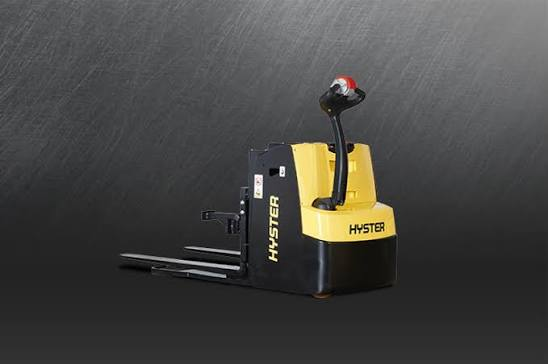
An electric pallet truck uses battery-powered drive and hydraulic lift systems. The operator walks behind or rides on a platform, using controls on the tiller to manage travel direction, speed, and forks. The machine provides the motive force the operator steers and controls, not pushes.
When the Manual Hand Pallet Truck Is the Right Choice
There are several cases where manual hand pallet truck is teh best choice:
Short distance, low frequency movement
If pallets are moving 10–20 metres between dock and storage, or being positioned within a single bay, the manual hand pallet truck handles the job without the overhead of battery management or charging infrastructure. For a small warehouse, a retail stockroom, or a facility where pallet movement is occasional rather than continuous, the manual truck is sufficient and the total cost of ownership over several years is significantly lower than an electric unit.
Cold storage and temperature-controlled environments
Battery performance in cold storage environments where temperatures drop to -20°C or lower degrades considerably. Manual hand pallet trucks operate in cold stores without battery concerns, charging logistics, or condensation-related electrical issues. The hand pallet truck in Saudi Arabia’s cold chain warehouses, particularly across the food distribution sector, continues to serve this role effectively.
Simple operations with low throughput demands
Not every warehouse needs to move 200 pallets per shift. Operations with straightforward layouts, modest daily pallet counts, and operators performing varied tasks rather than dedicated pallet transport roles are often better served by a manual truck and a small investment in operator training than by electric equipment that sits partially utilised.
Budget-constrained environments
The upfront cost of a manual hand pallet truck is a fraction of an electric unit. For businesses establishing new operations, managing tight capital budgets, or equipping secondary locations, the manual truck delivers adequate functionality at low initial investment.
When the Electric Pallet Truck Makes More Sense
Below are cases when electric pallet would be considered better:
Longer travel distances
This is the clearest switching point. Once average pallet travel distances exceed 30–40 metres per move, pushing a loaded manual truck creates cumulative operator fatigue that reduces productivity and increases injury risk over a full shift. The electric unit eliminates the physical effort of movement the operator controls the machine and walks alongside or rides, without pushing.
High throughput operations
Logistics centres, large retail distribution facilities, and manufacturing plants moving high pallet volumes per shift need consistent cycle times. An operator on a manual truck slows as fatigue accumulates through the shift. An electric truck maintains consistent speed and lift performance from the first pallet to the last.
Multi-shift operations
Where warehouses run two or three shifts continuously, the operator handling impact of manual trucks becomes a real staffing and productivity issue. Electric trucks reduce physical demand, which matters when operators are covering 8–12 hour shifts and the total daily pallet count is high.
Mixed floor surfaces and ramps
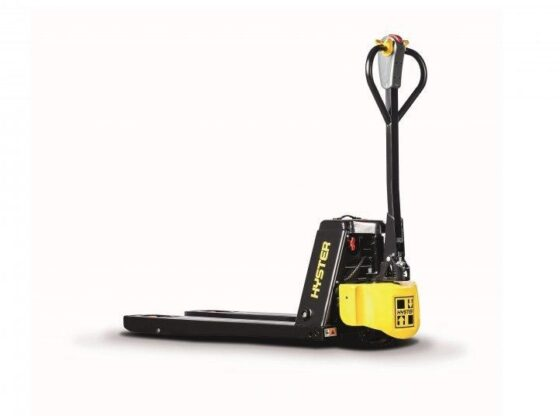
Moving a loaded manual hand pallet truck across uneven floor surfaces, across door thresholds, or up gentle ramps creates significant operator effort and load stability risk. Electric pallet trucks handle these transitions under power.
Comparing Side by Side
| Factor | Manual Hand Pallet Truck | Electric Pallet Truck |
| Travel distance | Under 30m | Over 30–40m |
| Daily pallet volume | Low to moderate | High |
| Shift duration | Single short shift | Multiple long shifts |
| Cold storage use | Yes no battery issues | Check model rating for temperature |
| Floor conditions | Level, smooth | Level or mild grade |
| Budget | Lower upfront cost | Higher upfront, lower per-pallet cost at volume |
| Charging infrastructure | Not required | Required plan charging area |
| Maintenance | Minimal | Battery, motor, controls service schedule needed |
Final Take
The hand pallet truck in Saudi Arabia’s warehousing and logistics market covers a huge range of operations from small retail stockrooms to large distribution facilities because its simplicity fits many environments adequately. The switch to electric makes sense when distance, volume, and shift intensity create productivity and operator welfare costs that the manual truck can’t absorb. Knowing which side of that line a specific operation sits on is the decision. For procurement teams and warehouse managers in Saudi Arabia sourcing either manual hand pallet trucks or Hyster electric pallet trucks, Kanoo Machinery provides the equipment, service infrastructure, and technical guidance to match the right machine to the actual operation. Contact our team at 920004017.
FAQs
What is the capacity range of manual hand pallet trucks in Saudi Arabia?
Standard manual hand pallet trucks typically handle 1,500kg to 3,000kg depending on the model. Kanoo Machinery supplies Hyster manual units suited to general warehousing, retail, and light industrial applications across Saudi Arabia.
At what travel distance should operations switch from manual to electric?
Once average pallet travel distances consistently exceed 30–40 metres per move, the operator fatigue and cycle time impact of manual operation makes electric units more productive and more cost-effective over a full shift.
Can electric pallet trucks operate in cold storage in Saudi Arabia?
It depends on the model and temperature rating. Standard battery performance degrades in sub-zero cold store environments. For these applications, the manual hand pallet truck in Saudi Arabia’s cold chain operations remains a practical choice, or a model rated for low-temperature use must be specified.
Does Kanoo Machinery provide after-sales support for Hyster pallet trucks in Saudi Arabia?
Yes. Kanoo Machinery operates one of the largest independent fork truck service networks in the Gulf, with spare parts counters in Dammam, Jubail, Riyadh, Jeddah, and Yanbu, and mobile service vans for on-site support.