



















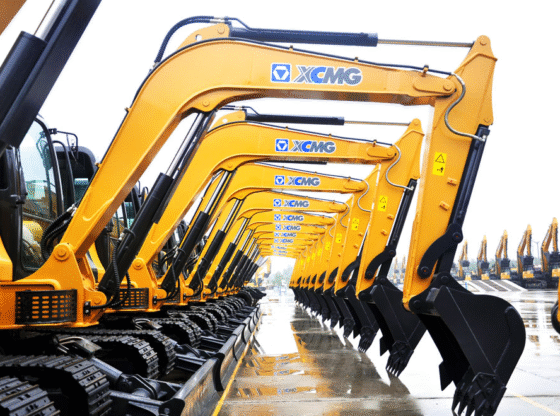

Saudi Arabia’s construction industry is running at a pace and scale that most markets don’t see simultaneously. Giga-project earthworks in the northwest, dense urban utility work across Riyadh’s expanding districts, petrochemical facility maintenance in Jubail, and housing development across the Eastern Province are all active at the same time and each one makes different demands on the excavator doing the work.
Specifying a standard excavator for a job that needs a compact excavator in Saudi Arabia costs time in tight sites and risks damage to surrounding infrastructure. Sending a compact machine to do work that needs a 20-tonne excavator means multiple passes, slower cycle times, and extended project timelines. Getting the size right isn’t a minor equipment detail it’s a decision that affects productivity, access, cost, and sometimes whether the job can be done at all.
What Actually Separates Compact from Standard
The weight boundary that most of the industry uses is 6 tonnes. Below that, a machine is generally classified as a compact or mini excavator. Above it, you’re in standard excavator territory. But the weight difference is a proxy for a set of capability and geometry differences that matter much more on-site.
Compact excavators like the Bobcat E35 (3.5 tonne, zero tail swing), E50 (4.9 tonne, zero tail swing, 3.52m max dig depth), and E85 (8.5 tonne) are built around confined space operation. Zero tail swing on the E35 and E50 means the upper house rotates fully within the width of the tracks the rear of the machine doesn’t swing beyond its own footprint. On a job site in Riyadh where the trench is alongside an existing building or an active traffic lane, that design feature is what makes the machine usable.
Standard excavators from 10 tonnes upward carry the counterweight and tail swing geometry required to handle deeper excavation, heavier loads, and high-volume earthmoving. Their power and capacity come at the cost of the footprint and swing radius that makes them impractical in confined situations.
Where a Compact Excavator in Saudi Arabia Is the Right Call
Urban utility work
Riyadh’s infrastructure expansion road widening, utility upgrades, telecom trenching, and drainage installation in built-up areas is ongoing and happens in environments where a standard excavator simply doesn’t fit. Pavements, kerbs, existing services, parked vehicles, and pedestrian areas all constrain where a machine can set up and how it can swing.
Residential and commercial construction footings and drainage
For villa foundation work, swimming pool excavation, drainage trenching on residential sites, and basement work in commercial buildings, the compact excavator is frequently the more productive choice even when a standard machine could physically access the site. The smaller machine manoeuvres between formed walls, works in tight corners, and loads spoil into trucks positioned in spaces that a larger machine’s swing radius would conflict with.
Facility and plant maintenance
Industrial facilities across Jubail and Yanbu regularly need excavation work inside processing plants, around pipework, and in areas where overhead clearance, floor loading limits, or the proximity of live equipment makes machine size a constraint. A compact excavator in Saudi Arabia’s petrochemical maintenance context is often the only excavator that fits the site conditions at all.
Landscaping and infrastructure finishing
Giga-project developments across the Kingdom involve significant landscaping, grading, and infrastructure finishing work where precision and access to partially completed spaces matter more than raw digging output. Compact excavators with extendable arm options the Bobcat E35’s hydraulically extendable arm extends up to 30 inches when needed handle this kind of varied task well.
Where a Standard Excavator Is the Right Call
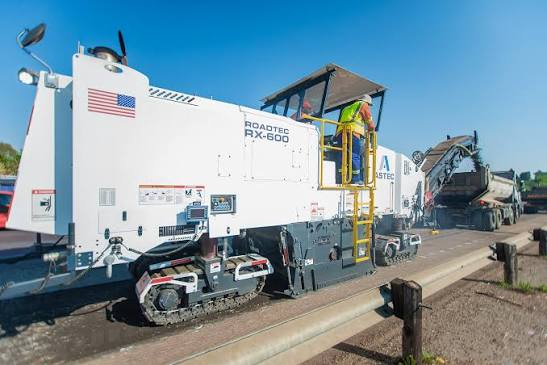
The compact excavator’s advantages disappear on open-site bulk earthmoving. When the job is moving large volumes of material across a wide, unobstructed site site preparation for a major development, large-scale levelling, deep foundation excavation for a multi-storey structure a standard excavator’s higher bucket capacity, greater dig depth, and faster cycle times make it significantly more productive.
The Decision Framework: What to Ask Before Specifying
| Factor | Points to Compact | Points to Standard |
| Site access width | Under 1.5m gate or passage | Open site with unrestricted access |
| Working proximity to structures | Excavating alongside walls or services | Open excavation away from structures |
| Ground conditions | Hard compacted urban surface | Soft or loose open terrain |
| Volume of material | Low to moderate trenching, footings | High bulk earthmoving, large foundations |
| Dig depth required | Under 3.5m | Over 3.5m |
| Swing clearance | Restricted zero tail swing needed | Unrestricted |
| Transport logistics | Standard trailer, easy site access | Requires low-loader, managed delivery |
In many Saudi projects, the answer isn’t one or the other it’s both. A large site development might use standard excavators for bulk preparation and compact excavators for service trenching, drainage installation, and finishing work as the project progresses into tighter construction phases.
Final Take
The size of the excavator is determined by the access constraints, swing clearance, dig depth, and volume requirements of the specific job not by general preference or what’s available. On Saudi Arabia’s construction sites, where conditions range from open desert greenfield to dense urban utility corridors, getting that specification right matters. Compact excavators in Saudi Arabia solve the access problems that standard machines can’t, and standard excavators cover the output demands that compact machines aren’t built for. For project managers and procurement teams, Kanoo Machinery provides the equipment, service infrastructure, and technical support across five Saudi locations. Visit our website Kanoo Machinery to browse options or contact our team at 920004017.
FAQs
What defines a compact excavator vs a standard excavator?
Weight class is the primary boundary compact excavators are generally under 6 tonnes. The practical differences are tail swing geometry, footprint, dig depth capability, and the volume of material they move per cycle.
What Bobcat compact excavators does Kanoo Machinery supply in Saudi Arabia?
Kanoo Machinery supplies the Bobcat compact excavator range in Saudi Arabia including the E35 (3.5 tonne, zero tail swing), E50 (4.9 tonne, zero tail swing, 3.52m dig depth), and E85, alongside attachments across hydraulic breakers, augers, grading blades, and compactor plates.
Can compact excavators handle Saudi Arabia’s hard caliche soil?
Yes, with hydraulic breaker attachments. The auxiliary hydraulic circuit on Bobcat compact excavators supports breaker operation for hard or rocky ground conditions common across parts of Saudi Arabia.
When should both compact and standard excavators be used on the same project?
On large development sites, standard excavators handle bulk earthmoving during preparation phases while compact excavators work service trenching, drainage, and finishing phases as the site becomes more built-up and access tightens.